

Local Wildlife Sites in the Montgomeryshire landscape near Welshpool
Safleoedd Bywyd Gwyllt Lleol
O goetiroedd hynafol cyfriniol i ddyfrffyrdd hudolus, mae gan y DU lleoedd gwyllt arbennig, di-nod, lle mae natur yn ffynnu
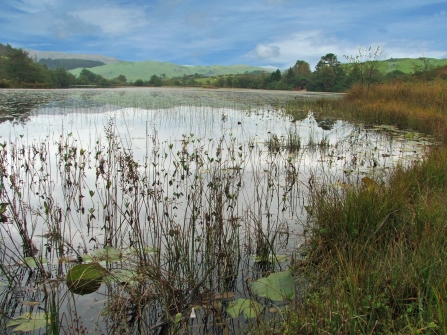
Lake Local Wildlife Site © MWT/Tammy Stretton
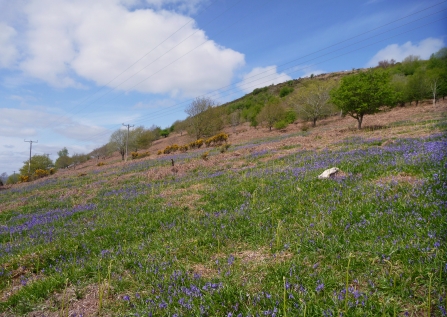
Ffridd Local Wildlife Site © MWT/Tammy Stretton
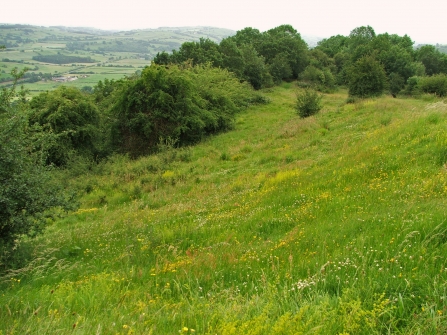
Grassland Local Wildlife Site © MWT/Tammy Stretton
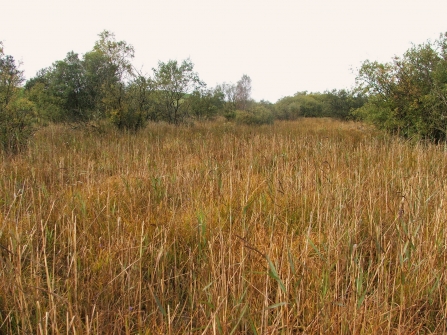
Wetland Local Wildlife Site © MWT/Tammy Stretton
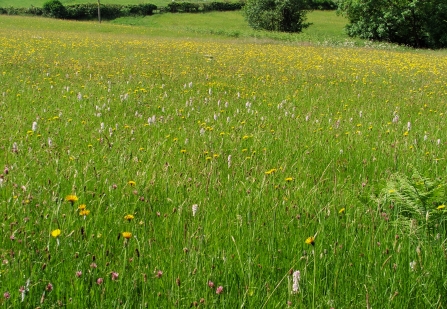
Meadow Local Wildlife Site © MWT/Tammy Stretton
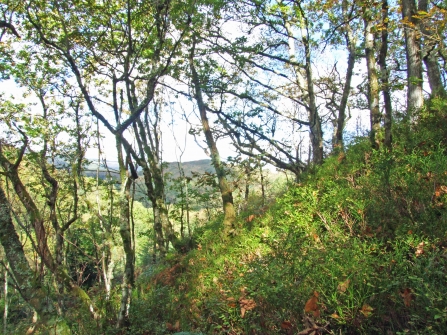
Upland Woodland Local Wildlife Site © MWT/Tammy Stretton
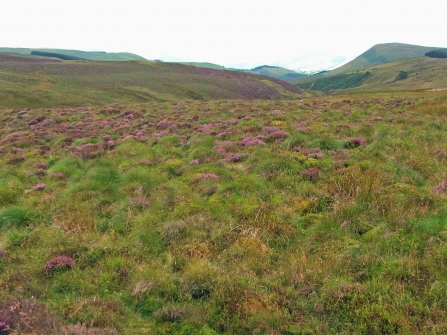
Upland Local Wildlife Site © MWT/Tammy Stretton
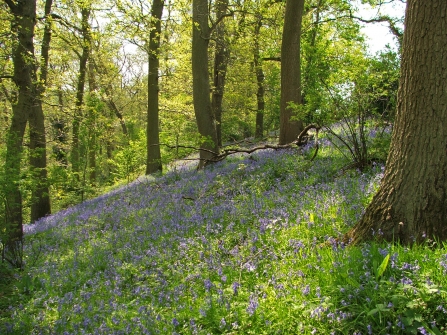
Woodland Local Wildlife Site © MWT/Tammy Stretton
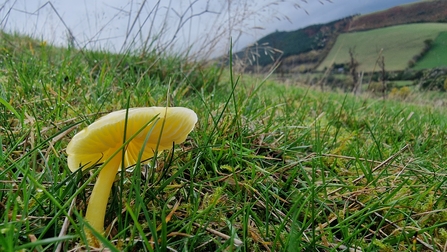
Yellow waxcap fungus emerging from a steep acid grassland in Wales © MWT/Tamasine Stretton
Beth yw Safleoedd Bywyd Gwyllt Lleol?
Mae cefn gwlad sy'n gyfoethog o fywyd gwyllt yn dda i les pawb, nawr ac yn y dyfodol. Mae llawer o'n hafanau bywyd gwyllt eisoes wedi diflannu, gyda planhigion ac anifeiliaid a oedd unwaith yn gyffredin bellach wedi mynd.
Mae gan y rhan fwyaf o ffermydd ac eiddo gwledig ardaloedd sy'n cael eu gwerthfawrogi oherwydd eu bywyd gwyllt; cae lle mae Cornicyllod yn nythu ac yn magu eu cywion bach, neu glawdd yn llawn blodau a gloÿnnod byw yn yr haf. Gall hyd yn oed safleoedd ger ardaloedd trefol fod yn bwysig, gan eu bod yn darparu coridorau bywyd gwyllt i drefi.
Mae ardaloedd lle mae bywyd gwyllt yn ffynnu yn bwysig iawn ac mae ymddiriedolaethau bywyd gwyllt ledled y DU yn nodi'r ardaloedd arbennig hyn fel Safleoedd Bywyd Gwyllt Lleol. Dyma'r lleoedd pwysicaf ar gyfer natur, y tu allan i ardaloedd gwarchodedig fel Safleoedd o Ddiddordeb Gwyddonol Arbennig.
Pam mae Safleoedd Bywyd Gwyllt Lleol yn bwysig?

Pam mae Safleoedd Bywyd Gwyllt yn bwysig
Lawrlwythwch y canllaw Safleoedd Bywyd Gwyllt Lleol

Wooded hill Local Wildlife Site © MWT/Tammy Stretton
Mae gan Sir Drefaldwyn 82 Safleoedd Bywyd Gwyllt Lleol / Safle o Bwysigrwydd o ran Gwarchod Natur

Local Wildlife Sites survey on a bog © MWT/Tammy Stretton
Mae arolygon o safleoedd arbennig Sir Drefaldwyn yn mynd rhagddynt

Uwchdir Safle Bywyd Gwyllt © MWT/Tammy Stretton
Mae'r safleoedd arbennig Sir Drefaldwyn yn cwmpasu 2,600 o hectarau!
Dewis Safleoedd Bywyd Gwyllt Lleol ym Mhowys
Er mwyn i system Safleoedd Lleol lwyddo a chael cydnabyddiaeth ddyledus, mae'n bwysig bod meini prawf trylwyr yn cael eu cynhyrchu ar gyfer dewis 'Safle Bywyd Gwyllt Lleol'. Gall y system wedyn ddangos pam mae safle penodol wedi pasio neu heb fodloni'r meini prawf ar gyfer bod yn 'Safle Bywyd Gwyllt Lleol', gan ei wneud yn broses y gellir ei chyfiawnhau. Rhan allweddol o'r prosiect Where the Wild Things Are oedd adolygu'r meini prawf oedd yn cael eu defnyddio ar gyfer dewis Safleoedd Bywyd Gwyllt ym Mhowys; Ysgrifennwyd y meini prawf blaenorol ym 1999, felly roedd hi'n bryd eu diweddaru. Cwblhawyd yr adolygiad ym mis Ionawr 2020 a gellir lawrlwytho’r meini prawf ar gyfer dethol cyfredol Safleoedd Bywydd Gwyllt Powys isod. Mae hon yn ddogfen fyw, felly bydd yn cael ei diweddaru mor aml ag sy'n angenrheidiol.
Gellir lawrlwytho'r fersiwn gyfredol o’r meini prawf ar gyfer dethol Safleoedd Bywyd Gwyllt Powys isod (diweddariad diwethaf 17/04/2020)
Os ydych chi'n rheoli rhywfaint o dir gyda bywyd gwyllt mewn golwg neu'n gwybod am dir a allai fod yn Safle Bywyd Gwyllt Lleol, byddem wrth ein bodd yn clywed gennych.
Ariennir prosiect Safleoedd Bywyd Gwyllt Powys gan raglen Lleoedd Lleol ar gyfer Natur Llywodraeth Cymru, a weinyddir gan CGGC a Chyngor Sir Powys

This project is funded by a Welsh Government Local Places for Nature programme, administered by WCVA and Powys County Council

Surveying a veteran tree in a churchyard © MWT/Tammy Stretton
Os ydych chi'n rheoli tir ar gyfer bywyd gwyllt ac eisiau cwrdd â phobl o'r un anian...
...ymunwch â'n clwb!
Ydych chi'n caru bywyd gwyllt? Eisiau dysgu mwy am helpu bywyd gwyllt ar y tir? Dewch i gwrdd â phobl o'r un anian drwy ymuno â Montgomeryshire Habitats Management Group (MHMG).
Mae'r Grŵp yn darparu fforwm i unrhyw un sydd â diddordeb mewn rheoli tir er budd bywyd gwyllt, ac mae o werth arbennig i dirfeddianwyr sy'n chwilio am gefnogaeth ac ysbrydoliaeth i gynhyrchu a chynnal cynefinoedd ar eu tir. Nod y grŵp yw rhannu gwybodaeth, profiad, sgiliau, syniadau ac adnoddau i wella bioamrywiaeth ar draws Sir Drefaldwyn. Mae hyn yn nod a rennir gan Ymddiriedolaeth Natur Maldwyn sy'n parhau i gefnogi'r Partner Cysylltiedig hwn yn eu hymdrechion.
Am ragor o wybodaeth neu i ymuno â'r grŵp, ewch i: www.mont-hmg.co.uk
Prosiectau a gwblhawyd ar Safleoedd Bywyd Gwyllt Lleol
Os hoffech ddarllen mwy am brosiectau blaenorol a oedd yn canolbwyntio ar Safleoedd Bywyd Gwyllt Lleol, mae dolenni isod.

