
Project Manager, Fran, shows event attendees around SFP nature reserve
Wild Skills Wild Spaces (WSWS)
An award-winning Nature for Wellbeing project delivered by Montgomeryshire Wildlife Trust between June 2021 and June 2025, this initiative was delivered in partnership with Powys Teaching Health Board and Cardiff Metropolitan University, with funding from the National Lottery Community Fund and the Welsh Government. Please note that this programme has now ended.
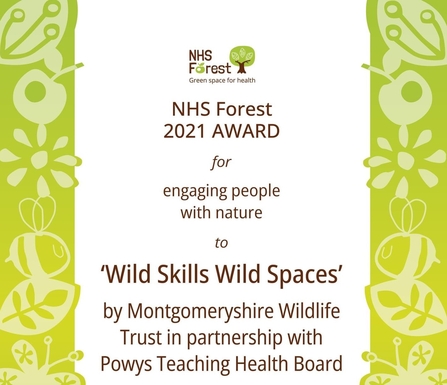
Pioneering project Wild Skills Wild Spaces boosted people’s mental and physical wellbeing by reconnecting them with nature. It enabled participants to learn new skills, build confidence, and meet other like-minded individuals through nature-based outdoor activities such as wildlife walks, hands-on conservation work, bushcraft, and produce-growing. The project also empowered people to make meaningful changes for nature and the environment within their local communities. Its impact proved so significant that it received the highly sought-after NHS Forest 2021 Award for Engaging People with Nature.
About the sessions
The weekly ecotherapy programme comprised practical, hands-on sessions delivered by a friendly and fully trained team. These sessions took place at uplifting, wildlife rich sites across Powys, including several of Montgomeryshire Wildlife Trust’s nature reserves, and included a wide variety of activities to appeal to all.
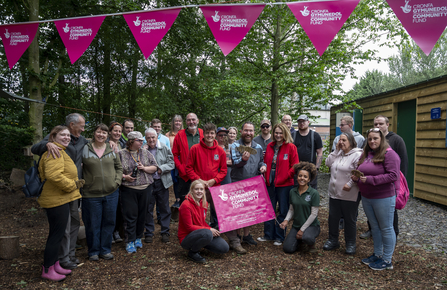
Thanks to funding awarded from the National Lottery Community Fund, WSWS were able to continue to provide ecotherapy sessions to people in Powys
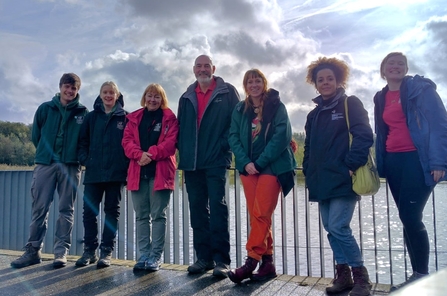
MyPlace project in Lancashire inspired WSWS to start their nature and wellbeing journey. The team met up in 2023.

Volunteers from Wild Skills Wild Spaces proudly erect the 2024 / 2025 Green Flag award at Severn Farm Pond nature reserve
Who was it for?
Wild Skills Wild Spaces supported young people and adults in Powys who were experiencing mental health challenges such as anxiety, depression, social isolation, or low self-esteem. The free, inclusive sessions engaged individuals who might not otherwise have taken part in outdoor or therapeutic activities, allowing them to progress at their own pace. Participation was available through referrals from primary and secondary healthcare providers, or via self-referral.
"It's really helped with my mental health and social anxiety..."Ponthafren Association
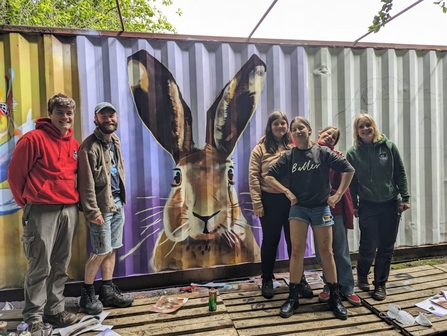
Young participants engaged with creating a fantastic nature mural at Severn Farm Pond, lead by Val Kuhl.
Wild Skills Wild Spaces were granted £1500 from the Tesco Stronger Starts scheme, enabling the mural to be created during the summer of 2024.
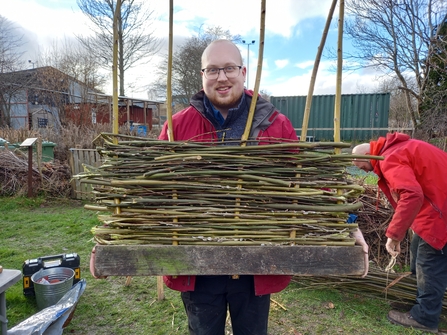
A Wild Skills Wild Spaces volunteer engaging with a weaving activity during our ecotherapy session
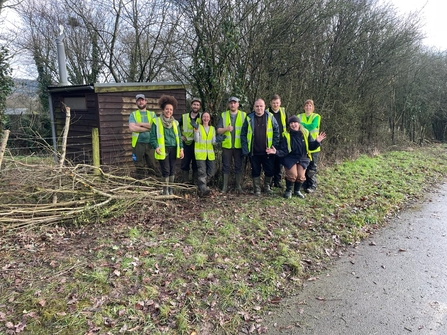
Volunteers of Wild Skills Wild Spaces raised money from their social enterprise project (2023) which then paid for their chosen activity of hedge laying.
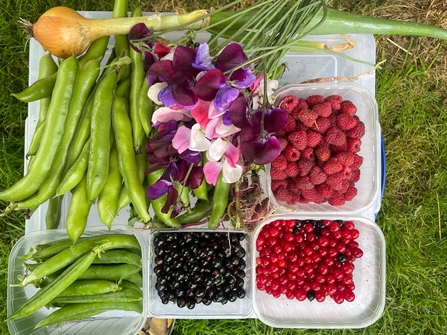
The Wild Skills Wild Spaces participants and volunteers were pleased with their 2024 summer harvest at Cultivates' green site
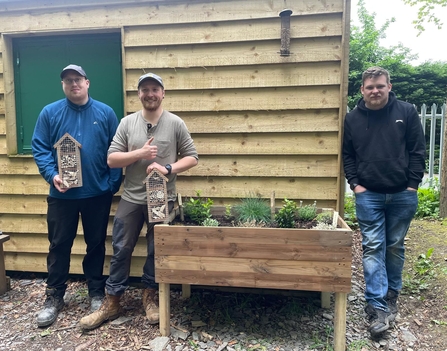
Wild Skills Wild Spaces volunteers made a new planter and bird feeders during their ecotherapy session at Severn Farm Pond Nature Reserve
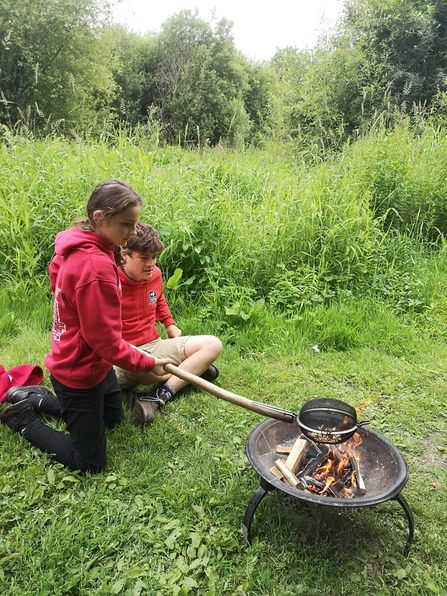
One young ecotherapy participant enjoys learning new outdoor skills
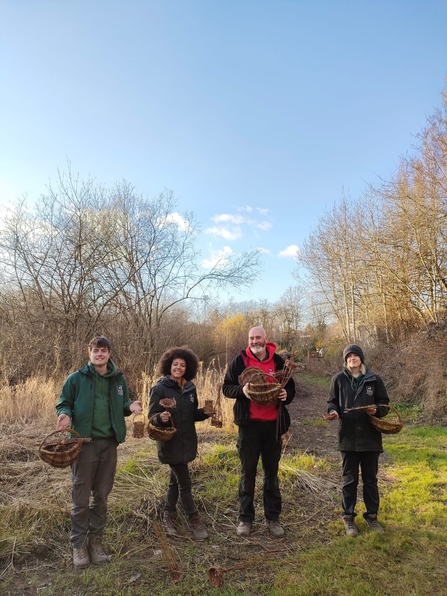
The WSWS team showing off their baskets, after a weaving ecotherapy session with participants. Lead by Jeanette at Weaving Wild
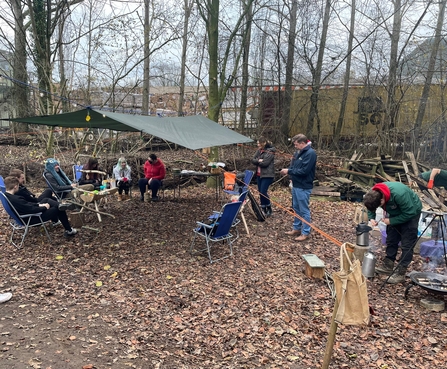
Severn Farm Pond Nature Reserve receives visitors for a Wild Skills Wild Spaces event
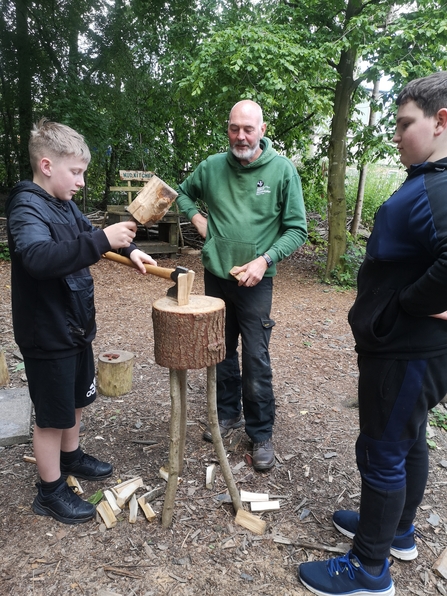
Young Wild Skills Wild Spaces participants engaging with green woodworking activity during our ecotherapy session
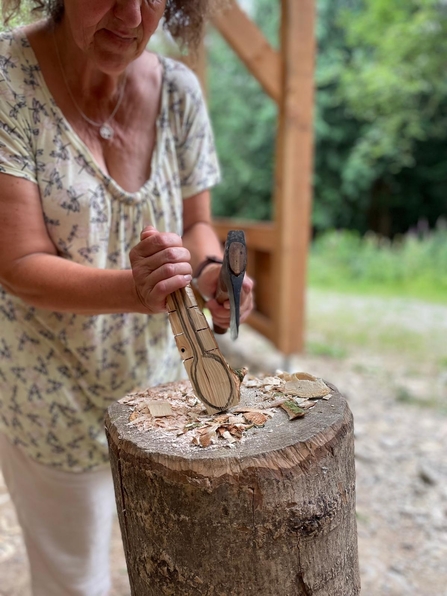
Wild Skills Wild Spaces hosted a 4 - week programme over the summer of 2024, inviting participants to engage with our wellbeing workshops, held at our Dolforwyn Woods Nature Hub
How does it work?
The Wildlife Trusts published a report with the University of Essex in 2017 about the effects of volunteering in nature on people’s mental health. The results were amazing, with 95% of participants with low wellbeing at the start reporting an improvement in 6 weeks, which increased even more over the next 6 weeks.
Wild Skills Wild Spaces was devised by MWT Head of Health and Wellbeing Carla Kenyon. She was inspired by Lancashire Wildlife Trust’s groundbreaking 'Myplace' project, which used this relationship between wildlife and wellness to come up with Five Ways to Wellbeing: Connect, Be Active, Take Notice, Learn and Give. These core principles were at the heart of the Wild Skills Wild Spaces programme.
What sort of activities were available?
Outdoor activities, linked to the Five Ways to Wellbeing:
Wildlife walks
Walking is an excellent way to keep physically fit and boost one’s mental wellbeing. It provides the opportunity to spend time in nature, to reflect, to connect with the wild world around us and to strike up new friendships. Our walks might be to look for plants or wildlife, to forage for ingredients to cook on the campfire or to practise mindfulness (being in the moment).
Bushcraft
Learning new skills, trying new things and sharing experiences are all fantastic ways to improve your wellbeing. Bushcraft activities might include green woodworking, cooking just-picked produce over a campfire and making homes for nature.
Gardening projects
Gardening can benefit wildlife and communities, as well as offering the chance to make discoveries and unwind in the great outdoors. Activities can include planting seeds, tending vegetable patches and cooking freshly-picked produce over a camp fire.
Practical conservation
Enabling people to keep active, learn useful skills and make meaningful changes for wild spaces and wildlife, practical conservation helps people feel valued and benefits the wider community. Activities could include scrub clearance, boardwalk maintenance and dead hedging.
Mindful environments
Taking time to get away from the stresses of modern life and technology and just be in the moment can do wonders for mental wellbeing. Activities might include some mindful sketching outside, or merely stopping for a while to take notice of our surroundings.
Wild Skills Wild Spaces (WSWS) was delivered in partnership with Cardiff Metropolitan University (CMU). From June 2021 to July 2025, CMU carried out comprehensive monitoring and evaluation, developing a framework to evidence the programme’s health and wellbeing benefits.
These evaluations were produced by the Centre for Health, Activity, and Wellbeing Research (CAWR) at CMU and are available below.
Take a look at their full reports here
- Volunteer Experiences Report 2023-2025 (4.59 MB)
- WSWS Framework Report 2023 (652.88 KB)
- Evaluation Report 2021-2023 (2.8 MB)
