
Mallards in flight; (c) Jon Hawkins/Surrey Hills Photography
Bird Flu
What is Bird Flu?
Avian influenza, more commonly known simply as ‘bird flu’, is a highly infectious disease caused by the influenza A virus that affects birds. It is spread between all bird species but waterbirds, such as gulls, ducks, geese and waders, are considered most at risk. The virus is often fatal, with some species more severely affected than others.
Human infections with avian influenza are rare, but some virus subtypes – including A(H5N1) and A(H7N9) – have been associated with human disease, generally in people directly exposed to infected animals.
In recent years, one particular strain of bird flu has become prominent: influenza A(H5N1) or or Highly Pathogenic Avian Influenza (HPAI). Globally, it has caused outbreaks amongst mink, marine mammals and dairy cows. Both A(H5N5) and A(H5N1) were detected in both wild and kept birds in Britain in 2025.

Canada Goose taking off; (c) Jon Hawkins/Surrey Hills Photography
What is the current situation?
The current risk of bird flu in wild birds in Wales ranges from “medium” (meaning the event occurs regularly) to “high” (meaning outbreaks occur very often). Defra together with the Welsh Government have produced some practical guidance to respond to this threat and try to mitigate against the virus’ impact on wild bird populations while protecting public health, the rural economy and the wider environment: Mitigation Strategy for Avian Influenza in Wild Birds in England and Wales
For the most up-to-date information and guidance, it’s recommended you visit either the Welsh Government's website or UK Government’s website.
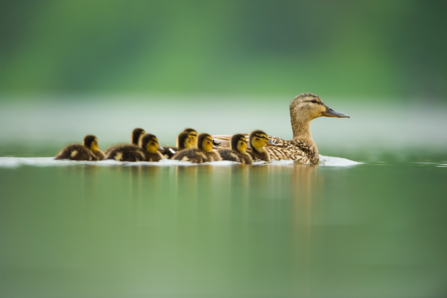
Photo: Andrew Parkinson/2020VISION
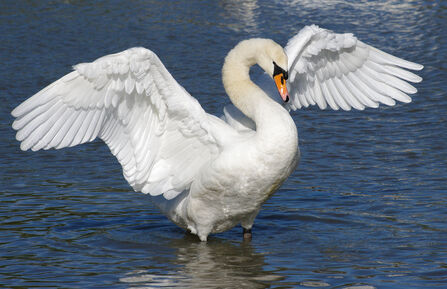
©Gillian Day
What is MWT doing?
While no conservation organisation can prevent avian flu from spreading, we can strive to help our wild birds, who already face pressures from pollution and loss of habitat and food sources, to be healthy and thrive. Nature reserves provide vital, safe spaces for our birds, and maintaining these areas has never been more vital.
We are also:
- Keeping an eye on bird populations on our reserves, especially those which attract large numbers of birds, such as Llyn Coed y Dinas and Dolydd Hafren.
- Reporting and arranging testing of dead birds as necessary.
- Continuing to work with Welsh Government, Natural Resources Wales and other organisations to coordinate reporting and action against this virus.
- Responding to enquiries from the public and signposting these to the relevant places.
We are asking visitors to our reserves to help us by:
- Keeping to footpaths to avoid disturbing birds.
- Keeping dogs on leads, on paths, out of any water bodies and away from birds.
- Avoiding touching any sick, injured or dying bird.
- Reporting any bird seen dead close to public areas such as footpaths to Defra (tel: 03459 33 55 77; https://www.gov.uk/guidance/avian-influenza-bird-flu

House Sparrow bathing; (c) Margaret Holland
How can everyone help?
Although garden birds are currently thought to be low risk when it comes to them contracting bird flu, they may still be impacted. Regardless, wild birds can contract other diseases, and outbreaks may be seen in gardens. Keeping your garden birds healthy is more important than ever, if they are to be resilient against the threat of bird flu. To do this, ensure you maintain good hygiene at bird feeders and watering stations (for detailed guidance, check out the BTO’s website) and only feed seasonally according to science-based advice shared by RSPB in spring 2026.
The bigger picture
The Wildlife Trusts movement, along with many other eNGOs, is also working to tackle the threat of bird flu, another symptom of ailing ecosystems, strategically, by lobbying governments and other governing bodies to take the following action:
- Government to develop a national strategy to help wild bird populations recover
- Effective monitoring, surveillance, research and reporting systems in place to build real-time understanding of the virus and its progress in wild birds
- Resilience built into vulnerable populations through recovery and conservation measures. This includes avoiding damaging development at sea and reduction of seabirds killed in bycatch
- Government to issue a moratorium on releasing large numbers of non-native gamebirds when avian flu is present across the country
- A new approach to poultry farming – intensive units that house thousands of hens and other domestic birds in barns are known to exacerbate the problem of contagious diseases, by providing ideal conditions for emerging pathogens to develop, which can then spread to wild birds
- More investment into how and why this is happening, to stand the best chance of avoiding similar tragedies in the future
- More resources for wildlife and nature charities to help with monitoring and tackling the problem


