

Photo: (c) Terry Whittaker/2020VISION
Respond to a planning application
Why respond to a planning application?
Development can cause serious harm to wildlife, but it does not have to. The right development in the right place, especially when coupled with biodiversity enhancements, can minimise the impact on the natural environment and the plants and animals it supports. Influencing a planning proposal is as much about promoting positive outcomes as it is about fighting harmful proposals – responding to planning applications gives wildlife a voice in the planning system.
To help, we will be signposting current planning applications you might wish to respond to on this page, and we will be sharing any letters of objection, or support, lodged by the Trust to inform your own responses.

Golden Plover; (c) Andrew Parkinson/2020VISION
Respond to Banc Du Energy Park
Bute Energy has submitted an application to build up to six turbines, together with associated works and infrastructure on land near Llangurig - Banc Du Energy Park (DNS CAS-01927-F0T2T1). In the application’s current form, it poses a threat to priority wetland and peatland habitats, and animals such as upland bird Golden Plover, along with Hen Harrier, Lapwing and Curlew – and MWT has objected on these grounds.
To find out more and respond (by 16th October)
What we do
At MWT, we will always stand up for local wildlife. Wherever possible, we respond to strategic planning applications, such as Local Plans, to ensure appropriate policies are in place or comment on selected planning applications, where there is either potential for significant negative impact on wildlife or conversely an opportunity to make significant gains for wildlife.
We will also provide advice to supporters and members of the public to enable them to comment on planning applications.
Where projects are given planning permission, we will work to ensure the best possible outcomes for wildlife.
However, as a small charity with very limited resources we have to prioritise which planning applications we can respond to, necessarily focusing on those where the potential impact on wildlife is likely to be greatest. With an increasing number of planning developments with potential to have significant impact on wildlife in the pipeline for Montgomeryshire, added to the growing financial challenges faced by charitable organisations such as ours, it is becoming more and more difficult to respond to the proposals which require it.
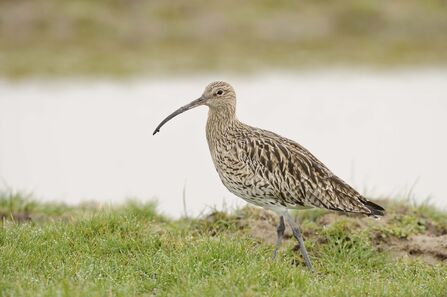
Curlew ©Terry Whittaker/2020VISION
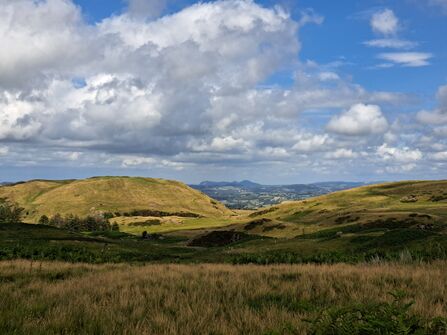
This upland in the Mynydd Waun Fawr area of Montgomeryshire would be affected by the proposed development Photo: © Lottie Glover
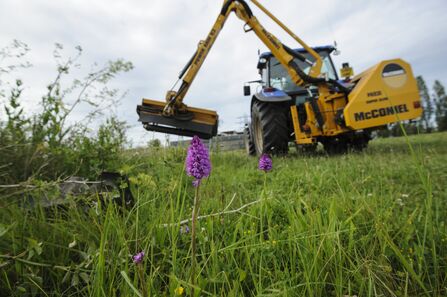
Photo: (c) Terry Whittaker/2020VISION
Communities and individuals can play a vital role in the planning process. If you want to stand up for wildlife in your area, taking part in consultations and responding to planning applications is a fantastic way to do this...
What can you do?
Communities and individuals can play a vital role in the planning process. taking part in consultations and responding to planning applications is a fantastic way to stand up for wildlife in your area.
While the response of a well-established wildlife conservation organisation will carry some weight with a local planning authority, public opinion often holds much greater sway, and indeed the system is set up to provide opportunity for the public to feed in. While we are able to contact MSs and MPs, this is in a more advisory capacity, while these lawmakers have a duty to listen to their constituents.
Large developments, such as nationally significant Infrastructure projects, have many stages, including statutory and non statutory public consultations. As we have limited resources, we typically will only engage once a full application is submitted to the relevant authority, whereas a member of the public or a local group could engage at each stage for greater impact.
Responding to a planning application step by step
While all planning applications will be different, here's some advice and guidance to help you respond, whatever the proposed development's size or type
1. Do your research
-
What type of application has been submitted?
-
What will the development look like? Plans and drawings will be available on the Local Planning Authority's (LPA's) website (Powys County Council in Montgomeryshire)
-
Have any ecological surveys been carried out? These will be with the plans on the LPA's website.
-
Is the development going to help or harm wildlife?
-
Which habitats and species could be affected? Each planning application should be accompanied by a search from the Local Environmental Records Centre (LERC) – either on its own or within an ecological survey report. If there isn’t one, you can request one from your LERC instead.
-
Is the site protected for wildlife? Are there protected sites nearby? The Local Wildlife Sites system is slightly different in Powys – click here.
-
Is the developer offering to offset wildlife loss, or put in features for wildlife as a part of the development (mitigation and compensation)?
-
Will the development result in Net Benefit for Biodiversity?
-
Is the site allocated for development in the Local Development Plan?
-
Has it had planning permission before? It is often helpful to read previous planning applications, especially if planning permission has been refused in the past.
-
Will the decision be made by the Planning Committee?
-
Most local authorities will provide plans and other documents for a planning application online. If not, you can ask the local planning authority to send you copies. Read everything thoroughly. If you don’t understand something, you can ask the case officer or look at the guide ‘What to do when faced with a planning application in Wales’ by Planning Aid Wales. It can also help to look at aerial photos of the site or visit the site if it has public access. If you feel that there is not enough information to tell whether wildlife would be harmed, you can write a holding objection to request surveys or more details.
- For very large or significant developments, see our page about major developments and Developments of national significance.
2. Decide what you want to happen
Should there be no development at all, or can some development still take place? Can harm to wildlife be avoided if work takes place at a different time, or if some parts of the site are protected during work? Would it be acceptable if the wildlife losses were compensated in some way? Go to this page on mitigation and compensation to see how developments can still happen while protecting wildlife. Can you suggest improvements to the proposal that would benefit wildlife?
If the application is potentially very damaging, and/or a lot of people are concerned, it is best to get together at this stage to co-ordinate your action. See our page on running a local campaign.
3. Write your response
Once a planning application is made public, there are usually three weeks to make a comment, although this can be longer for more significant developments.
-
Make sure your letter or email quotes the planning application reference number and address and is addressed to the correct planning case officer.
-
Planning applications are decided based on material considerations. These are factors such as highway safety, design and appearance, light and noise, effect on historic features, disabled persons access, and local and national policy. Nature conservation is a material consideration. How material considerations will affect a planning application is guided by the Local Development Plan (found on your local authority website) and Welsh national planning policy.
-
If you do not want a development to go ahead, or you want changes to the plans, you must write an objection demonstrating that the proposal would go against the policies of the LDP and/or national planning policy. It is helpful to quote the policy or refer to the paragraph number. Provide clear evidence to support your objection, such as ecological surveys, designated sites, or species records.
-
If you have suggestions for ways to protect wildlife, or alternative proposals, do mention them here. You can also submit a supporting comment where wildlife has been protected and helped. These help the case officer to make decisions that support biodiversity.
- For example planning responses, visit https://www.wtwales.org/example-responses
Remember to ask to be told about of any changes to the application, new information and any decisions.
4. What happens next?
Most planning decisions are made by a planning case officer. Larger planning applications are decided by a Planning Committee. Members of the public can speak at a Planning Committee Hearing.
There are several possible outcomes to a planning application. Only a developer can appeal against a planning decision, but you can comment again if an appeal is made.

Peter Cairns/2020VISION
Planning Aid Wales
An independent charity that supports community engagement in the planning system in Wales, Planning Aid Wales. They have a range of useful resources and also run numerous online webinars